
Elective Egg Freezing
Elective egg freezing, also known as oocyte cryopreservation, is a method of preserving a woman’s fertility by freezing her eggs for potential future use. It involves stimulating the ovaries to produce multiple eggs, which are then retrieved, frozen, and stored for later use in assisted reproductive technologies such as in vitro fertilization (IVF).
More women are considering egg freezing as a proactive step to preserve their fertility until they are ready to start a family.
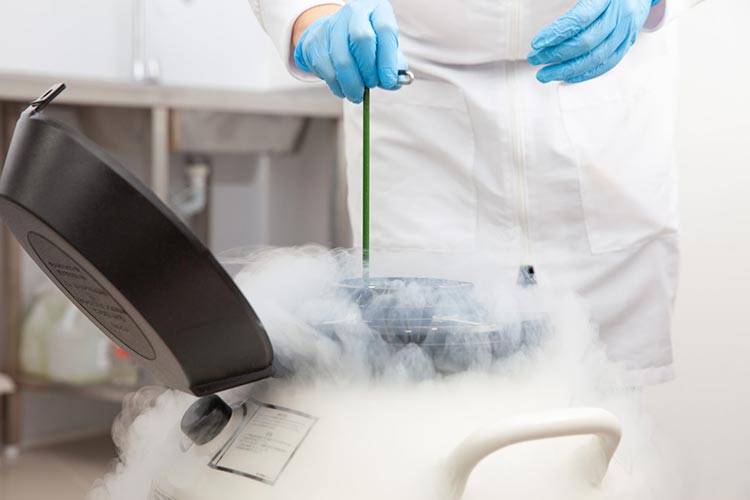
Is elective egg freezing suitable for you?
Egg freezing is suitable for women who want to preserve their eggs for future use. There could be a variety of reasons why egg freezing is carried out – these may include:
- You wish to delay family planning to prioritise your careers or studies
- You have underlying medical conditions such as cancer or autoimmune disorders. These conditions require treatment that can impact fertility
- You have yet to meet a suitable partner and wish to increase your chances of conceiving in the future when you are ready to start a family
What are the advantages of elective egg freezing?
Elective egg freezing is a viable option for women who wish to delay childbearing and combat age- related infertility.
All women have a biological clock. Every woman is born with all the eggs that she will ever have in her lifetime. Egg count as well as the egg quality (whether the eggs are genetically normal in terms of number of chromosome) deteriorate with age. Particularly after 37 years old, fertility begins declining at a rapid rate.
By allowing you to use eggs that were frozen when you were younger and more fertile, elective egg freezing gives you an extra opportunity to go back in time to conceive – with eggs that are more likely to give you a baby.
Eligibility and Regulations
In Singapore, women between the ages of 21 to 37, regardless of their martial status, are eligible for egg freezing. This age range is considered optimal for maximizing the chances of successful retrieval and future use of frozen eggs.
Women are permitted by the Ministry of Health (MOH) to store their frozen eggs indefinitely, provided they revisit every decade to renew their consent, similar to the process required for frozen embryos in vitro fertilization (IVF).
The Egg Freezing Process in Singapore
- Consultation and Fertility Assessment: The process begins with a consultation with your doctor who assesses your reproductive health through blood tests and ultrasounds
- Ovarian Stimulation with Medication: To retrieve multiple eggs, the woman undergoes hormonal treatment to stimulate her ovaries to produce multiple mature eggs.
- Egg Retrieval Procedure: Once the eggs reach maturity, they are retrieved through a minor surgical procedure performed under sedation.
- Egg Freezing and Storage: The retrieved eggs are then frozen using a technique called vitrification, which ensures they are preserved in a stable state until they are needed in the future.
Timeline and success rate of egg freezing
Timeline of Egg Freezing Process
The initial consultation, fertility assessment and counselling takes about 1 – 2 weeks. Ovarian stimulation is ideally started during the first few days of the menstrual period but can be initiated at any time in the menstrual cycle if needed without compromising outcomes. It usually takes about 10 – 14 days to stimulate the development of multiple mature eggs before the woman is ready to undergo egg retrieval. Generally it takes about 2.5 – 3 weeks from the start of ovarian stimulation injections to the egg retrieval stage. Recovery from the egg retrieval procedure is usually quite rapid; you would be advised to rest for 1 – 2 days after the procedure before returning to work.
Storage of Eggs
Eggs can be stored indefinitely through cryopreservation. Once the eggs are frozen, they are frozen in time. Time is not a factor if the retrieval and freezing are done properly.
Success Rate of Egg Freezing?
The success rate of egg freezing is very much dependant on the number of eggs and quality of the eggs frozen. These two factors are highly dependent on the age of the woman. For women up to the age of 37, you will generally need to freeze about 10 – 15 eggs in order to have a 50 – 70% chance of a live birth. Research indicates a 90% survival rate for thawed eggs, with a 50 – 70% fertilization rate.
Choosing a Fertility Clinic
When selecting a fertility clinic for egg freezing in Singapore, consider the following:
- Accreditation and Experience: Look for clinics accredited by relevant authorities and with experience in egg freezing procedures.
- Doctor Qualifications and Success Rates: Check the qualifications and track record of the fertility specialists at the clinic.
- Cost Transparency: Ensure the clinic provides clear information on all costs associated with egg freezing, including consultation, procedures, and storage.
Egg freezing in Singapore
Egg freezing can empower you to plan for your family on your terms without worrying about time. It is important, however, to speak to a professional for an accurate assessment of your fertility status. At CareIVF, we provide advice and treatment plans that are customised to your health needs.
Make an appointment with our fertility specialists, or visit our fertility centre, CARE IVF to start planning your journey today. Care IVF provides a wide range of Assisted Reproductive Technology (ART) treatments including elective egg-freezing.
Frequently Asked Questions
What is elective egg freezing?
Egg freezing, also known as oocyte cryopreservation, is a process where a woman’s eggs are extracted, frozen, and stored for future use. This procedure allows women to preserve their fertility for medical or personal reasons.
Who is eligible for egg freezing in Singapore?
Women between the ages of 21 to 37 are eligible for egg freezing, regardless of their marital status.
What are the steps involved in the egg freezing process?
The egg freezing process typically involves the following steps:
- Initial consultation and assessment
- Ovarian stimulation using hormonal medications
- Monitoring of the ovarian response
- Egg retrieval procedure
- Freezing and storage of the eggs
How much does egg freezing cost in Singapore?
The cost of egg freezing in Singapore varies but generally ranges from SGD 10,000 to SGD 15,000 per cycle.
Are there any risks associated with egg freezing?
While egg freezing is generally safe, there are some risks, including:
- Ovarian hyperstimulation syndrome (OHSS)
- Complications from the egg retrieval procedure
- Emotional and psychological impacts
How long can frozen eggs be stored?
Eggs can be stored indefinitely through cryopreservation, as time is not a concern when retrieval and freezing are performed correctly.
What is the success rate of using frozen eggs for future pregnancies?
The success rate of egg freezing is very much dependant on the number of eggs and quality of the eggs frozen. These two factors are highly dependent on the age of the woman. For women up to the age of 37, you will generally need to freeze about 10 – 15 eggs in order to have a 50 – 70% chance of a live birth. Research indicates a 90% survival rate for thawed eggs, with a 50 – 70% fertilization rate.
Are there any alternatives to egg freezing?
Alternatives to egg freezing include embryo freezing (if you have a partner or are using donor sperm) and ovarian tissue freezing. Consulting with a fertility specialist can help determine the best option based on individual circumstances.
What is the difference between embryo freezing and egg freezing?
Egg freezing preserves unfertilized eggs for future use, while embryo freezing preserves already fertilized eggs (embryos). Egg freezing allows you to choose the sperm later, whereas embryo freezing requires it beforehand.
Is financial assistance available for egg freezing in Singapore?
Currently, there are no specific financial assistance programs or government subsidy for elective egg freezing in both public and private institutions in Singapore. However, Singaporean or Singapore Permanent Residents may utilise their MediSave for IVF-related procedures. As an approved institution under MediSave and MediShield Life Scheme, CARE IVF can assist patients with fertility treatment claims.
What should I consider before deciding to freeze my eggs?
Consider factors such as your age, fertility potential, medical history, future family planning goals, and financial aspects. Consulting with a fertility specialist can provide personalized advice and help you make an informed decision.
Can I use my frozen eggs at any fertility clinic in the future?
Generally, you can use your frozen eggs at different fertility clinics, but it is important to check the policies and procedures for transferring eggs between facilities. Coordination between clinics is necessary to ensure the safe and effective transfer of eggs.
How do I get started with the egg freezing process in Singapore?
To get started, you can schedule a consultation with a fertility specialist with Care IVF. The specialist will provide a comprehensive evaluation, discuss your options, and guide you through the process.
Our Fertility Specialists

Obstetrics & Gynaecology, Fertility, IVF/ICSI, Urogynaecology
Dr. Paul Tseng Seng Loke has over 30 years of experience as an Obstetrics and Gynecology specialist, with a subspecialty focus on urogynecology and subfertility management. A dedicated advocate for patient-centered care, Dr. Tseng is recognised for his expertise in handling complex fertility issues, with a particular focus on IVF and ICSI.
Dr Tseng will be able to manage the whole process from fertility to delivery. This continuation of treatment will allay the anxiety of seeing another doctor for your pregnancy.

Obstetrics & Gynaecology, Fertility, IVF/ICSI, Egg preservation and freezing.
Dr. Chua Kah Mui Eunice is a fertility specialist with extensive experience in in-vitro fertilization (IVF) and assisted reproductive technologies including egg preservation and freezing. She brings a wealth of knowledge from her previous roles at Singapore General Hospital.

Obstetrics & Gynaecology, Fertility, Reproductive Medicine, Assisted reproduction, IVF, Fertility Preservation, Egg freezing
Dr. Serene Lim is a distinguished Obstetrics and Gynecology specialist with many years of experience. Renowned for her expertise in reproductive health and IVF in Singapore, she has become a leading figure in the country’s fertility landscape, offering comprehensive treatments including ovulation induction, artificial insemination, in-vitro fertilisation, embryo and egg freezing, ovarian tissue freezing as well reproductive surgery.

Obstetrics & Gynaecology, Fertility, IVF
With over 26 years of experience, Dr Fong Yang is one of the few IVF specialists in Singaporebwho treats both male and female infertility. Notably, Dr. Fong was the first in Singapore to perform Percutaneous Sperm Aspiration, a procedure for men with obstructed sperm ducts. He offers a comprehensive range of fertility services, including laparoscopic surgery, IUI, and IVF, helping couples achieve their dream of parenthood. Dr. Fong also emphasises early pregnancy care, particularly for women with a history of miscarriages.

Dr Cheng Li Chang
Fertility, IVF/ICSI, Egg preservation and freezing
Dr. Cheng is a renowned reproductive medicine specialist with extensive experience in managing complex fertility cases. Dedicated to personalised care, he offers tailored fertility treatment plans for each patient. His fluency in both Mandarin and English and conversable in Malay/Bahasa Indonesia ensures a comfortable and culturally sensitive experience for a diverse patient.
Need A Helping Hand?
Drop us a line anytime, and one of our staff will respond to you as soon as possible